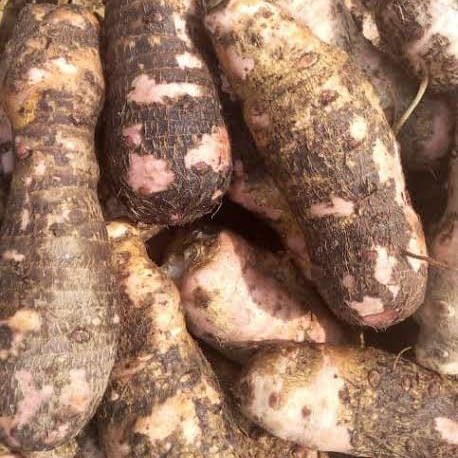
AMIDST the rising global incidence of benign prostatic hyperplasia (BPH) and the promising potential of nutraceuticals as supplementary therapies in reducing the disease’s burden, experts think cocoyam could be a safe diet in the prevention and treatment of enlarged prostate.
According to a new study, cocoyam, a common food, can provide better options for management and/or prevention of enlarged prostate because it has less adverse effects and the ability to reduce prostate weight, total protein, and prostate specific antigen level.
Benign prostatic hyperplasia (BPH) is the medical term for an enlarged prostate. It is not cancer, but rather a health problem that worsens with age. The prostate is a tiny gland that aids in the production of sperm. It is located directly below the bladder and frequently grows larger as a man ages.
It can produce symptoms such as a blockage of urine flow out of the bladder. It can also result in frequent or urgent urination, urinating more frequently at night, difficulty starting to urinate, dribbling at the conclusion of urination, a weak urine stream, or a stream that stops and starts.
Many treatments are available to deal with prostate enlargement. Medicines, surgery, and other procedures fall under this category. However, the best approach is determined by factors such as symptoms, prostate size, and other underlying health issues.
Cocoyam (Colocasia esculenta) is a popular tropical root crop produced for its starchy corms or underground stems. It is regarded as a major staple crop throughout the Pacific Islands, Asia, and Africa.
The fact that different ethnic groups in Nigeria have distinct names for cocoyam attests to its widespread dissemination and use. In Ibo, it is known as ede/akaso/uli, in Hausa as guaza, and in Yoruba as koko pupa.
It has been used to treat conditions such as asthma, arthritis, diarrhea, internal hemorrhage, neurological diseases, and skin disorders. To stimulate menstruation and treat stomach troubles, a decoction of the leaves is drank.
The leaves are cooked over a fire and used as a poultice to boil, and the sap of the leaf stem is used to treat conjunctivitis in New Guinea.
The researchers at Ebonyi State University, in partnership with their Ugandan colleagues, investigated the safety of cocoyam ingredients and how they caused a reduction in prostate weight, total protein, and prostate specific antigen levels.
They claimed that the protection provided by cocoyam against prostate enlargement is equivalent to that provided by finasteride.
In general, cocoyam is equally effective as finasteride at preventing prostate hypertrophy. There was a considerable increase in mean relative prostate weight (about five times) as well as a drop in testicular relative weight (about 1.4 times less).
The average relative weights of the most essential organs, the liver, kidneys, and heart, did not differ much.
Furthermore, they claimed that the relatively reduced prostate weights in some of the groups of rats indicate that these treatments may be able to diminish prostate size at the lower doses used in this study.
 Health Blog